Fifteen factories said no.
I messaged every factory on Alibaba that looked like it might be able to put cork on a bottle. “We don’t do this.” “We can’t do this.” “So sorry.” The one that finally said yes wanted to be paid before it would show us a thing.
Off to a great start.
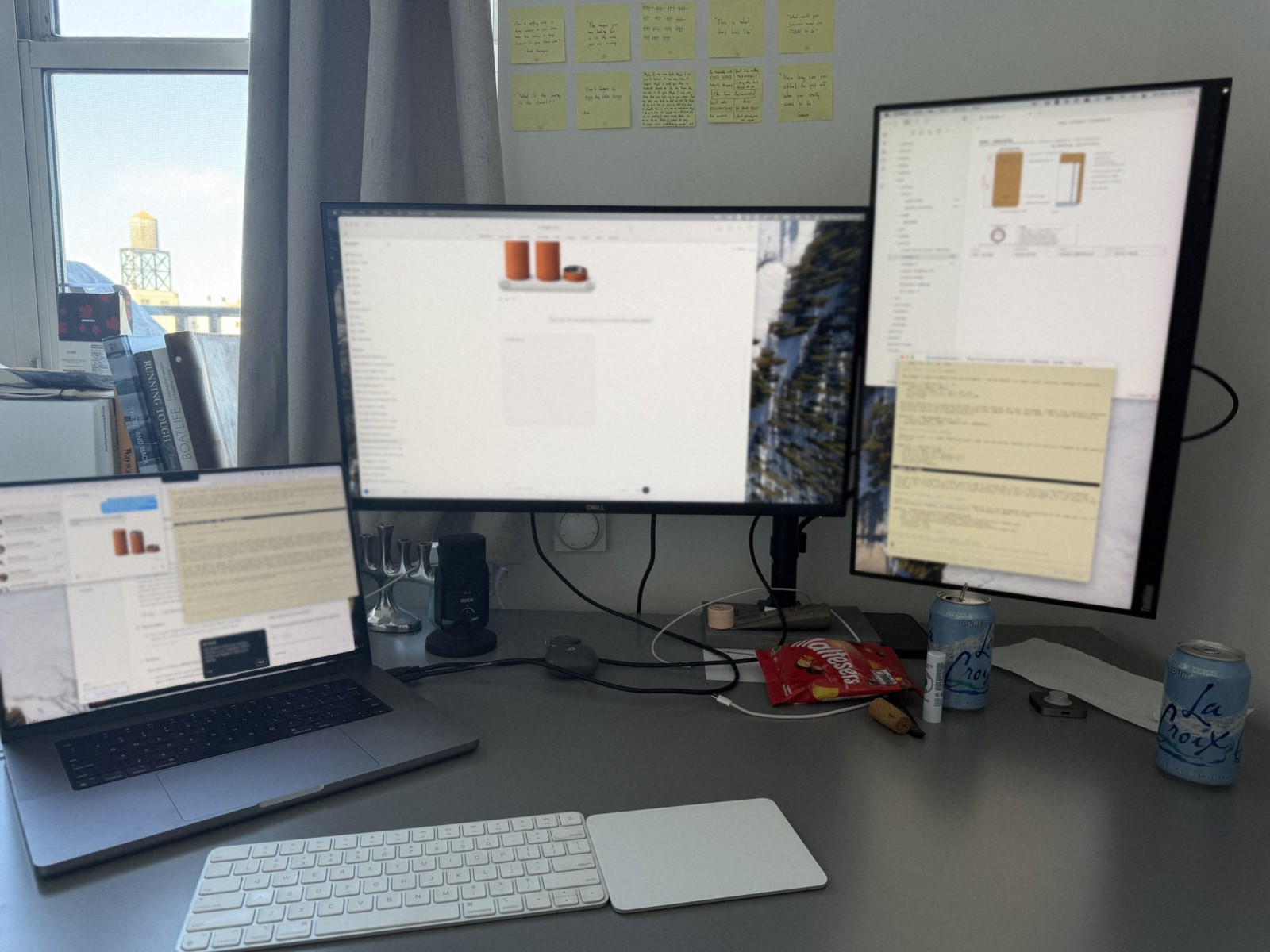
Meanwhile, our ugly prototypes were taking daily trips to Solly’s sauna. We needed help. I just didn’t love admitting it. So I turned to my business advisor (Mr. Claude) and was pointed to a sourcing partner.
Solly and I eagerly explained our vision, awaiting validation. Instead, we were told, “Oh, so you guys don’t have a tech pack, no design backgrounds, just an idea?”
“We can take you from 1 to 100, but you’ve got to get from 0 to 1.”
“How do we do that?” I naively asked.
“Give these guys a call,” they said, and shot us an email intro to a company called Loveit out of Grand Rapids, Michigan.
A week later, on our first Zoom call, I blurted the quiet part out loud. “The entrepreneur in me, the reason these calls are interesting is how much of it can I do without needing you guys.” Translation: can we just bootstrap this thing?
Then the honest part. We both have full-time jobs. What we actually needed was a crutch for everything we didn’t have the experience, or the hours, to do ourselves.
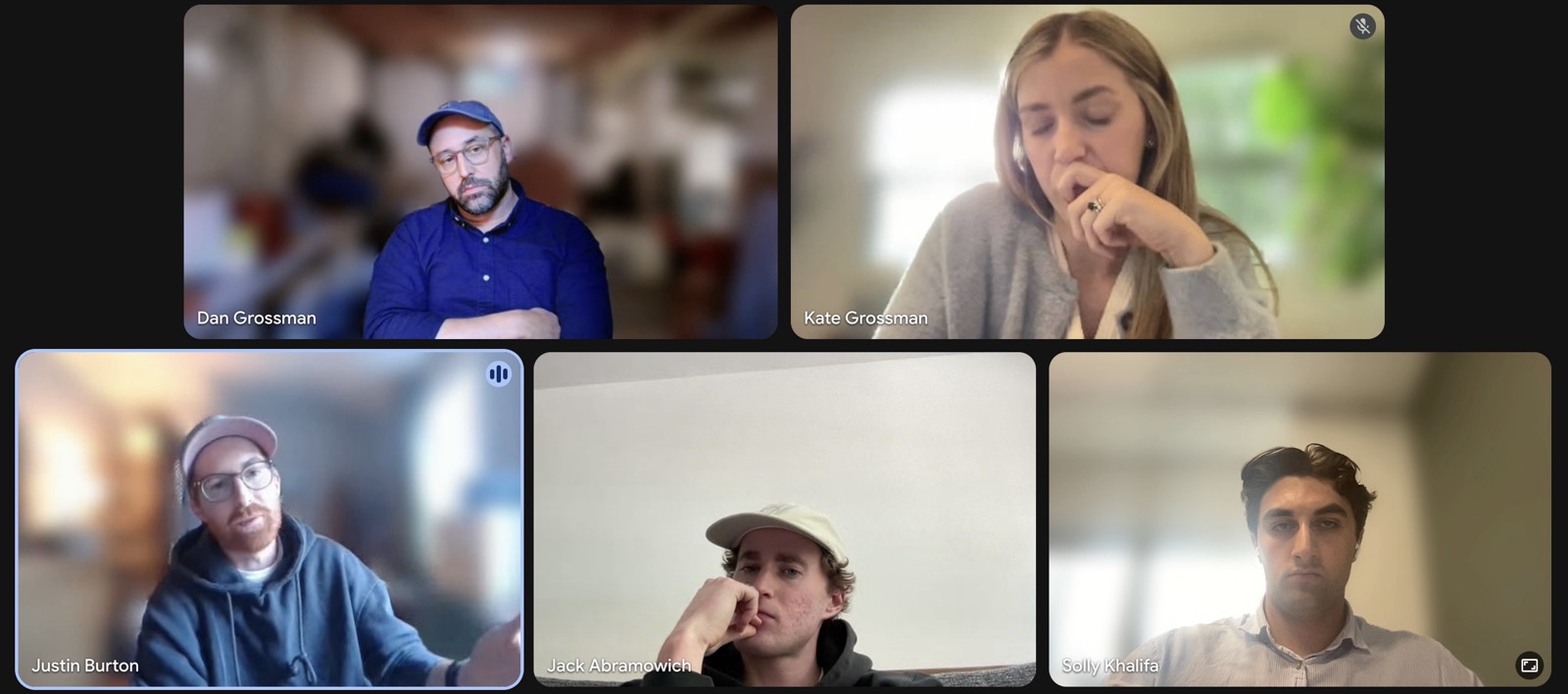
But there’s also that old saying: never swing at the first pitch. So we fielded several other calls, some in the US, some in Canada, and narrowed it down to two final proposals. One studio would hand us a tech pack and a list of factories and wish us luck. The other wanted to come along for the whole ride.
Naturally, we said “buckle up” and chose Loveit.
We wrote them an email. Solly drafted it. It opened with: “Our thesis remains intact that this is a missing product in a trending market.”
I read it back to him. “Our thesis remains intact?!” What kind of corporate jargon is this? We are a startup. And, importantly, a water bottle startup. Just be like, “We still believe in the product.”
Deleted. He works in finance and can’t help it.
Then Solly made the best point of the day. Choosing a partner that wants to build a relationship and come along for the journey aligns our incentives. If they win when we win, they’ll care about it the way we do.
But there was one question from that very first call we still hadn’t answered. They’d asked it like it was easy.
“Beyond the bottle, beyond the product, what are you trying to build?”