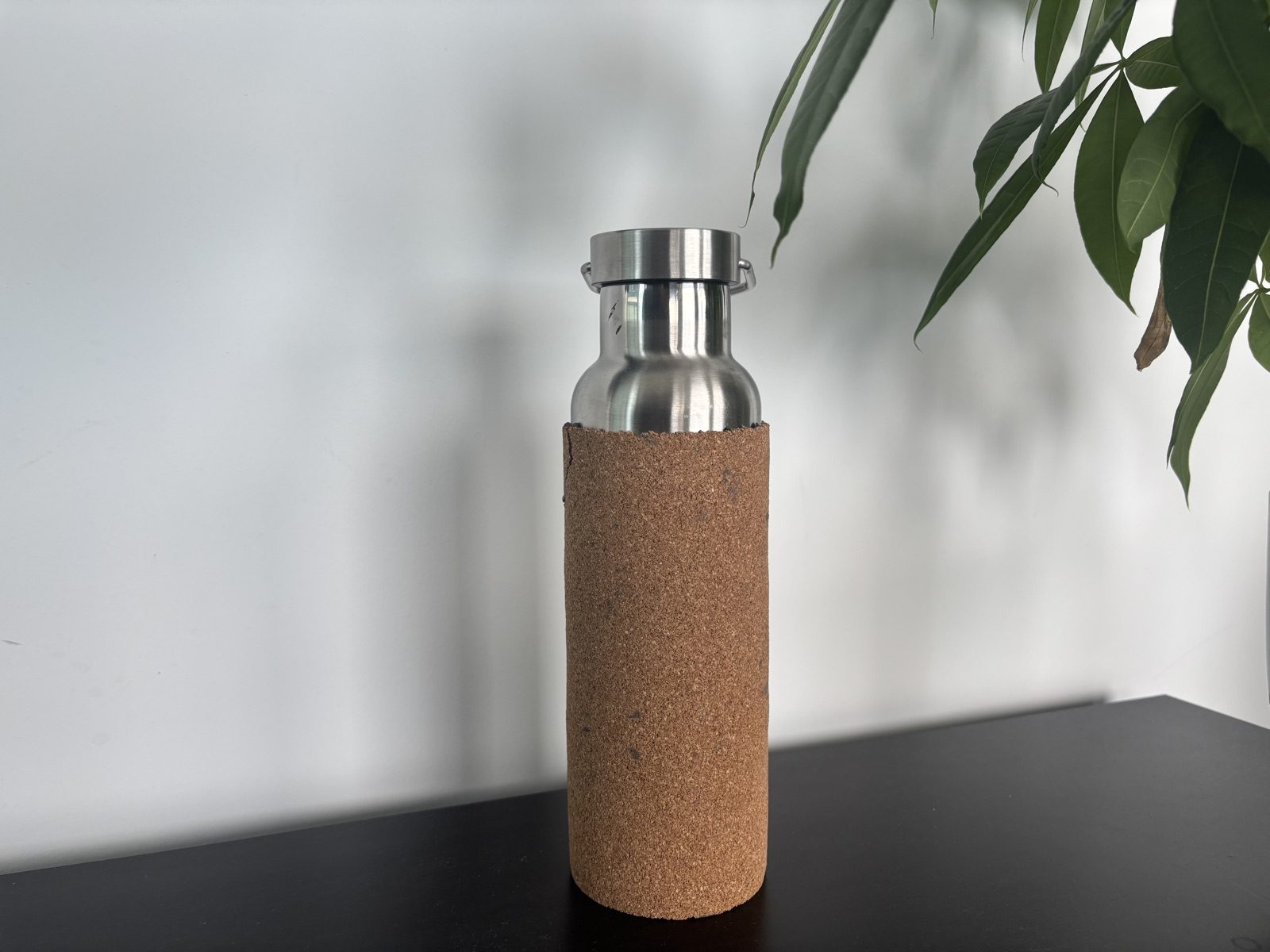
Neither of us had ever held a sheet of cork.
Sure, back in elementary school we’d poke thumbtacks into cork boards to make funny shapes – but now we had a business to run, so we needed to think about this more seriously. Probably.
We didn’t know if it would feel like a wine cork stopper or a yoga mat or something in between. How thick should this be to stay cool in a sauna?
We wanted to know three things: whether the cork would last, whether it would stick, and whether it was too brittle. We both wanted to consult with people more familiar with the water-bottle industry, or cork-experts, but figured we could do a little discovery on our own first. Turns out, we’ve been doing that since fourth grade.
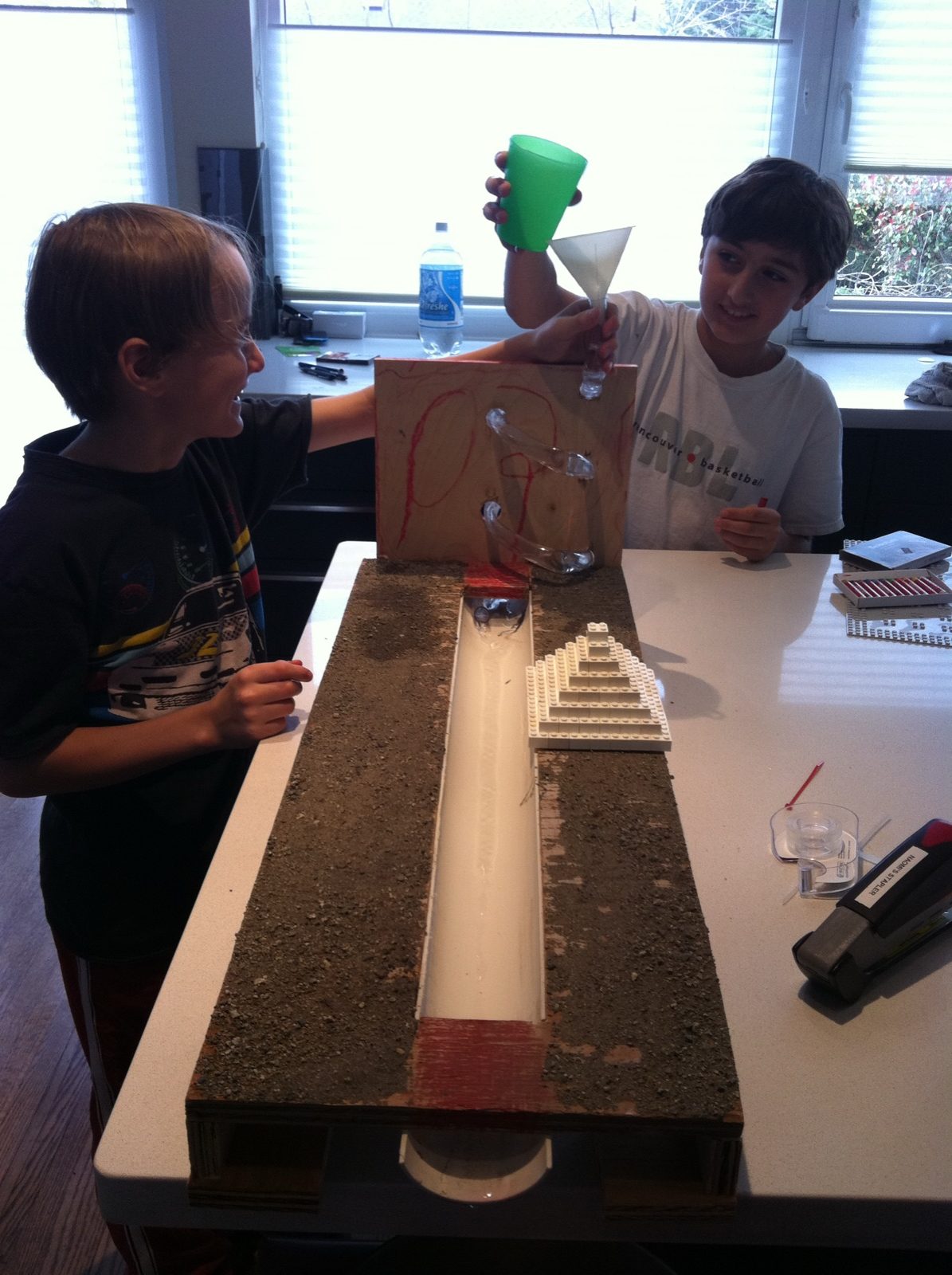
The plan was four bottles: two with 3 mm cork (one on scratched steel, one smooth), two with 4 mm. An hour in the oven every day, then a “pull test”. We’d draw a marker line at the top edge of the cork to see if it started to sag. It was meticulous. It was scientific. We wrote it in a notebook.
Fortunately, I had to fly home to Vancouver, which meant I could take advantage of two things: my dad, and my dad’s workshop. It felt like the good old days. Joe, who had been following the project from a respectable distance, took one look at what needed to happen and quietly took over. I became his assistant. My main job was answering Jack’s FaceTime and pointing the camera at whatever Joe was doing.
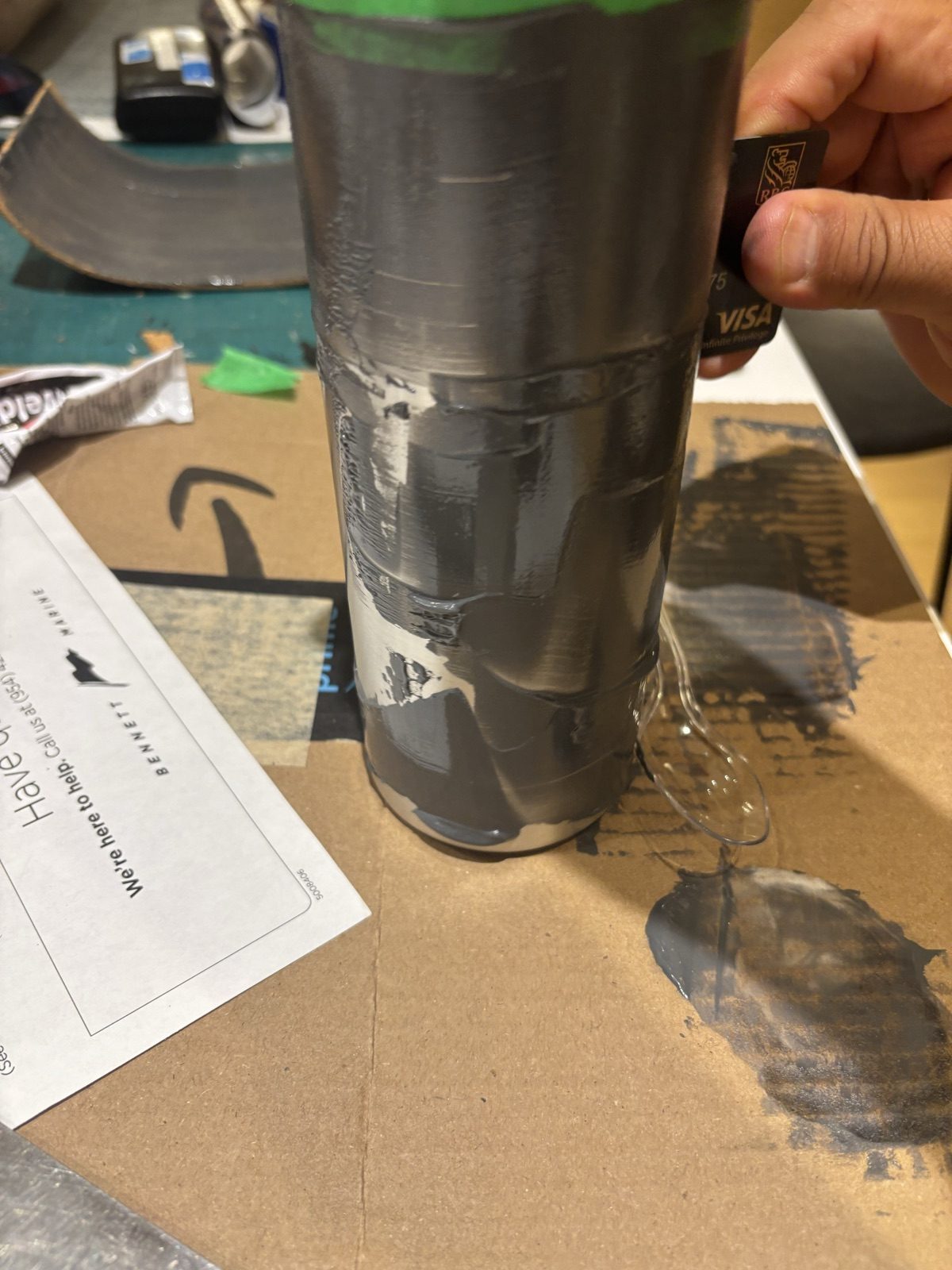
What we actually built was 3 mm and 4 mm cork, glued onto plain stainless bottles ordered off Amazon. We measured and cut it by hand, which left a seam, and the seam filled with epoxy. The epoxy got on the bottle, the seam, my hands, and probably the floor. Just a finance guy and his dad cutting cork with kitchen scissors and calling it R&D.
We looked at the finished prototype, felt pretty good about ourselves, and decided it was ready to test.
So we put it in the oven.